
……BY BILLY SUTER……
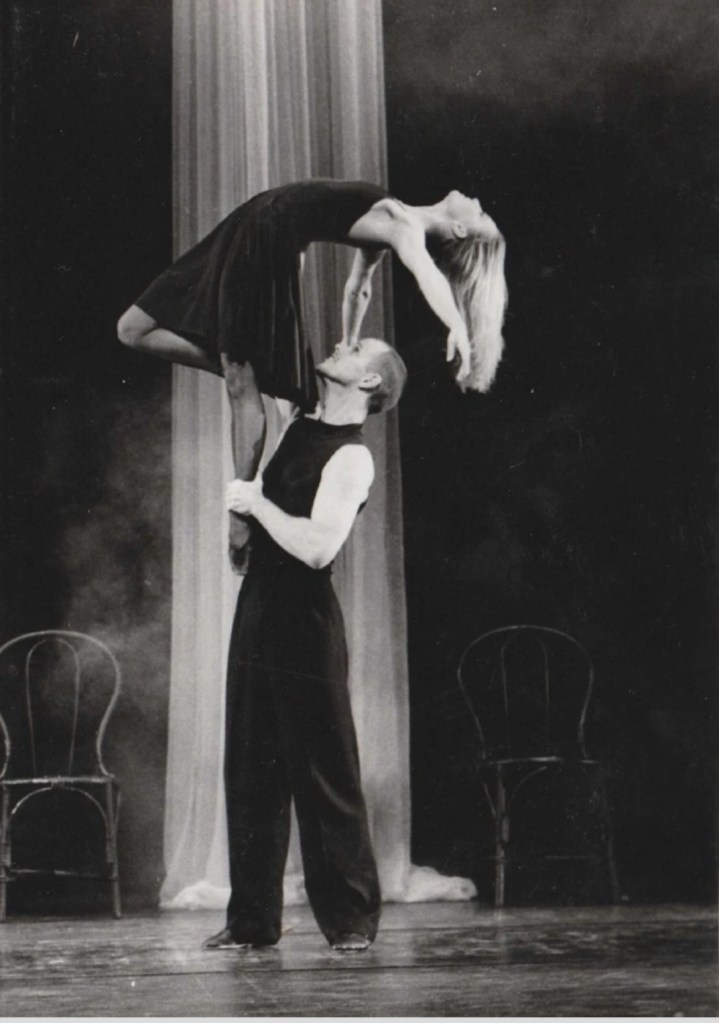
HAVING stopped dancing in 1998 to pursue law yet continued to teach ballet for some years after that, former Durban Playhouse Company dancer Andrew Gilder returns to dancing in his hometown, on the Playhouse Opera theatre stage, this festive season
He will dance the role of The King in Joburg Ballet’s Sleeping Beauty – which has two sold-out performances, on December 13 and 14, at The Playhouse – after having danced the role of Mr Teavee in Joburg Ballet’s recent world premiere season of Charlie and the Chocolate Factory. That ballet by Mario Gaglione, featuring an original score by composer Mark Cheyne and designs by Andrew Botha, was staged in Johannesburg in October.
After his Durban performances in Sleeping Beauty, Gilder will take the role of the Fairy Godmother in Mzansi Ballet’s production of The Abba Show (the story of Cinderella set to Abba’s music). It’s scheduled to run from December 26 to January 19 at the Pieter Toerien Theatre at Montecasino in Johannesburg.
Joburg Ballet is one of the companies for which Gilder regularly gives company class, and the production of Sleeping Beauty is the same one the company performed in Gauteng in June and July this year. Gilder did not appear in that production – the role of The King was danced by Nigel Hannah, a veteran of the various Gauteng ballet companies that have existed over the years.
Gilder says he is looking forward to dancing again at the Playhouse and adds that this Sleeping Beauty is significant as it was staged under the artistic direction of Sophie Sarrote, an Italian-based ballet producer and ballet mistress.
“Sarrote brings a different artistic sense than other versions that have been staged in South Africa over many years, most of which have been based in the British ballet tradition. This means that the Joburg Ballet show retains all of the traditional elements associated with the story and the ballet choreography, but with a recognisable European flair, as opposed to the slightly more restrained English approach that is more familiar to local audiences.”
After some decades when developing a legal practice was his priority, Gilder says he is now squarely back in the dance world and is a guest company teacher, in classical technique, for a number of professional dance/ballet companies around the country.
“It all came galloping back when I moved back to KwaZulu-Natal in 2020 and old friend and colleague, Lliane Loots, head of Durban’s Flatfoot dance company, invited me to give class to Flatfoot. I continued to work with Flatfoot and BreakThru Dance Company (both in Durban), Mzansi (Johannesburg) and Jazzart Dance Theatre (Cape Town).
“Then, earlier this year, Elroy Fillis-Bell (Joburg Ballet CEO) invited me to give a guest company class to Joburg Ballet. I’ve been giving regular guest company class for Joburg Ballet for most of this year, and when I was also invited to dance Mr Teavee in Charlie and the Chocolate Factory I jumped at the opportunity.”
As if all of this has not been enough to keep him on his toes, the 57-year-old also simultaneously runs a climate change and carbon markets legal practice (see: www.climatelegal.co.za).
Gilder now has a home base in Westbrook, 35km from Durban, although he travels continuously for teaching and legal work.

He says dance lay dormant for him between 2010 to 2020, although he had been the chair of the South African International Ballet Competition since its inception in 2008 (see: www.saibc.org.za).
“I now run two professional lives simultaneously, lawyering and dance. It’s a strange story, I grant you. For example, of the lawyering, I drafted the South African Climate Change Act with my business partner, which the President signed into law earlier this year.
“I’ve been an attorney for 25 years, originally doing an LLM in environmental law. I had a BA LLB before dancing because I’ve always looked crap in khaki and camouflage and needed to stay out of the army in the ’80s. Studying law was the way to avoid conscription.”
Gilder first became interested in dance in his teens, after he took a part-time job as an usher at Durban’s old Alhambra Theatre in 1982, and was immediately taken by theatre.
“The then-Pact Ballet did a production of Swan Lake and a triple bill in Durban that year and I was an extra in Geoffrey Sutherland’s Hunchback of Notre Dame (1983) which was the last season danced by Durban and London dance legend Dudley von Loggenburg,” Gilder recalls.
“When The Playhouse theatre opened in 1985, I continued working as an usher. So I had open access to the heyday of the Napac Dance Company under the direction of Ashley Killar, for the latter part of the 1980s and into the 1990s.
“With all of this professional dance influence I started ballet training in Durban while studying for my BA LLB degrees (1985 to 1989). Then I continued with full-time vocational training in classical ballet, contemporary and jazz dance techniques at the UCT School of Dance (1990 to 1992).”
In 1992, Gilder joined Durban’s Napac Dance Company which, a year later, became the Playhouse Dance Company under the artistic directorship of Mark Hawkins.
As a member of the Playhouse Dance Company, Andrew danced a wide range of ensemble, soloist and principal roles in both repertory and new works. He also got to create his own, original choreography, including for opera and musicals, before continuing his dance career in Turkey (from March 1997) and later returning to Durban to perform in the inaugural season of the Fantastic Flying Fish Dance Company (September 1998).
He lived and worked in Cape Town between late 1998 and early 2003, when he directed and choreographed musical theatre productions for high schools and taught classic ballet technique classes (including for Jazzart Dance Theatre), while completing his legal master’s degree and qualifying as an attorney.
His vast performance repertoire at the Playhouse has included Oberon and Lysander (A Midsummer Night’s Dream; choreography by Mark Hawkins): Harlequinade Pas de Quarte (set by Dianne Richards after Anton Dolin); Summer Day pas de deux (choreography by Jack Carter); Cain in Cage of God (choreography by Jack Carter); Franz (Coppelia, third act, set by Dianne Richards after Ashley Killar) and the pas de deux from Le Corsaire, Don Quixote and White Swan, all set by Dianne Richards.
He also recalls, among highlights, choreographing the opera Carmen, directed by the late Themi Venturas, and The Magic Flute; both for Opera Afrika.
In early 2003, Andrew relocated to Johannesburg to work in the legal profession and to teach classic ballet technique at the Dance Factory and for various Johannesburg-based dance companies and studios.
Between 1998 and 2014, he regularly reviewed theatre and dance productions and wrote about dance and dance-related issues for the Turkish Daily News (out of Istanbul), Dance Europe (out of London), the Mail and Guardian, the Cape Times, The Star and the Financial Mail.
He is an alumnus of Durban’s St Henry’s Marist Brothers, now Marist College, and in 2025 will be working with Romi Schuman, Head of Culture there, to create a production of A Midsummer Night’s Dream.
Looking back on his career he says he cherishes having been lucky enough to be trained by, or to work with, some of the most important South African ballet masters and dance teachers, including Dudley Tomlinson, Dianne Richards, Elizabeth Triegaardt and Dudley von Loggenburg.
“This realisation and the importance of honouring and extending the precious information those teachers passed down to me and my generation, is among the reasons that, after more than a decade when my focus was on the law, I am now firmly back in the dance world – both as a teacher and a performer.”
 .....SoSuterBill.....